

This article has been translated using machine translation. Therfore, the content may contain inaccuracies or may not perfectly reflect the original meaning. For complete accuracy, please refer to the original version of the text. We appreciate your understanding.
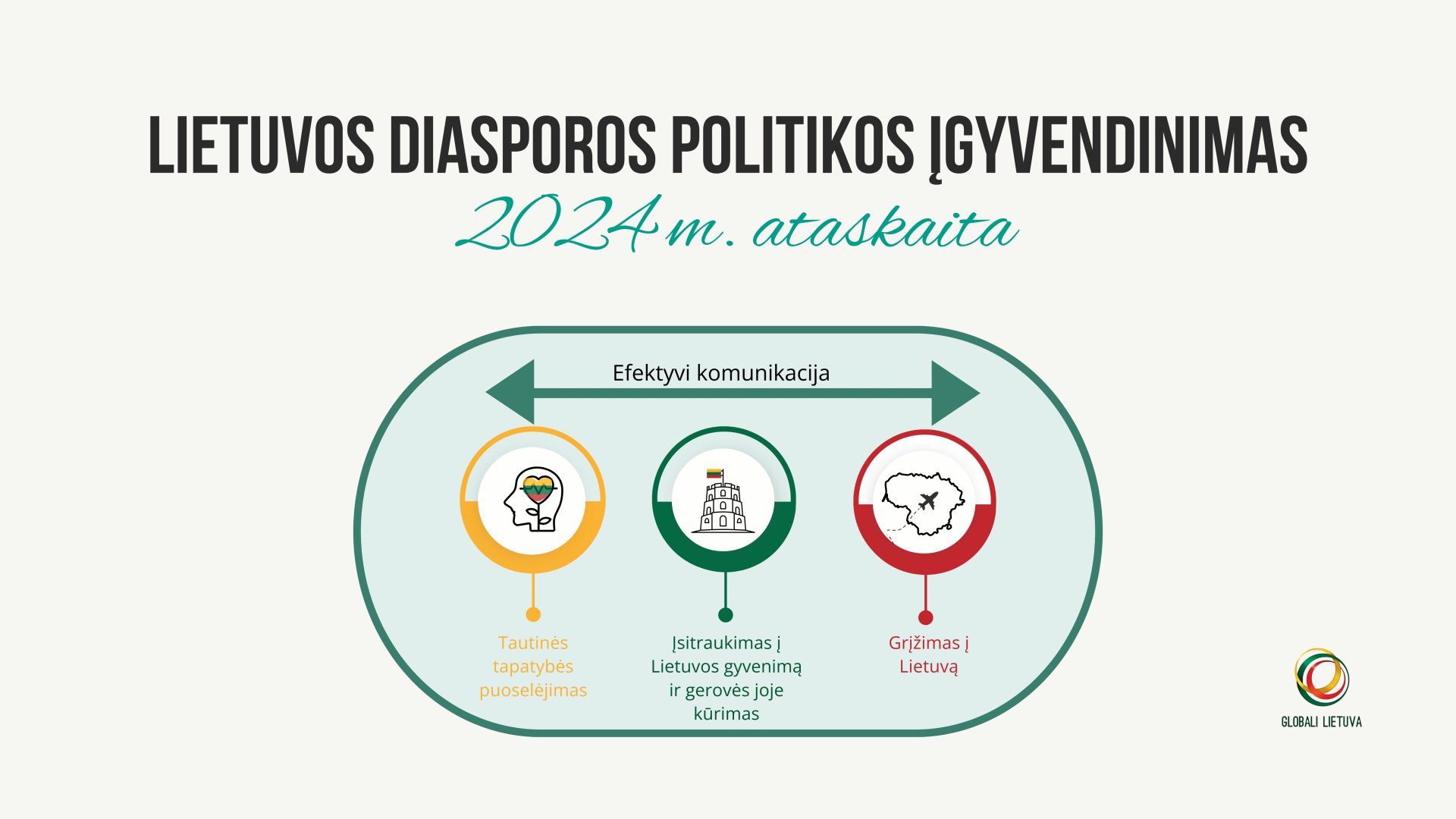
At the March 25 meeting of the Commission of the Parliament of the Republic of Lithuania (Seimas) and the World Lithuanian Community, the report on the 2024 action plan for the strategic guidelines of Lithuania’s diaspora policy, “Global Lithuania,” was presented.
Lina Žukauskaitė, Director of the Global Lithuania Department at the Ministry of Foreign Affairs (MFA), who presented the report, emphasized that the 2024 results reveal a steadily increasing involvement of state and local government institutions in strengthening ties with Lithuanians abroad and the diversity of implemented activities. In 2023, 25 new state institutions and municipalities joined the implementation of the 2022–2030 strategic guidelines “Global Lithuania” action plan — a total of 74 institutions carried out 202 actions (compared to 176 in 2023) across more than 50 countries worldwide. A stronger state commitment to strengthening ties with the diaspora is also demonstrated by an 18% increase in funding — €11.5 million was allocated for diaspora policy implementation in 2024 (compared to €9.8 million in 2023). The 2024 Lithuanian diaspora survey showed that the diaspora feels increasing attention from the state — 94% of respondents believed they have conditions to nurture Lithuanian identity while living abroad.
The expansion of Lithuanian-language education and focus on the younger generation of the diaspora were among the most important priorities of diaspora policy. Continuous state support ensured stable funding for 90 Lithuanian schools abroad, and various promotional initiatives increased their popularity. In 2024, 22 Lithuanian education institutions were newly established or resumed activity, and the total number of their students grew by 13%, reaching 12,500. State institutions also contributed to financing various summer internships and educational programs for Lithuanian diaspora youth.
In 2024, considerable attention was also given to other areas of nurturing national identity, including the preservation of traditional and modern Lithuanian culture abroad. Particularly important in preparation for the Lithuanian Song Festival — which included participation by 89 Lithuanian groups from 21 countries — was the work of the Lithuanian National Culture Center: consultations by its specialists, seminars held, and support provided for the World Lithuanian Day event during the Song Festival. Increased focus was also placed on preserving and researching diaspora cultural heritage, and together with partners, a map of culturally significant heritage sites in France was prepared.
The report highlighted the importance of strengthening diaspora civic engagement. In 2024, the Lithuanian Riflemen’s Union abroad established new units in Denmark, the United Kingdom, and Finland; the diaspora was informed about opportunities to contribute to national defense and civil resistance; and 65,665 voters abroad registered to vote in the referendum on amending Article 12 of the Constitution — the highest number in independent Lithuania’s history.
State institutions and municipalities coordinated by the MFA paid great attention to implementing the idea of a “Returning Lithuania.” In 2024, the MFA established the “Grįžtu LT” (I’m Returning LT) Consultation Center, which provided more than 1,800 individual consultations to returnees and shared up-to-date information on the new website www.griztu.lt and at various diaspora events. The Employment Service, implementing the “Maybe to Lithuania” project and providing individual consultations in every municipality, tripled the number of consultations offered to the diaspora, advertised more than 7,000 jobs attractive to the diaspora, and created the “Lithuanian Regions Map,” allowing comparison of over 50 indicators in municipalities. Together with the Ministry of Economy and Innovation, it implemented the “Diaspora-Friendly Employer” initiative. Presentations of Lithuania’s economic priority sectors, business creation events in Lithuania, and support for scientific internships in Lithuania for Lithuanian students studying abroad were organized. In 2024, twice as many citizens returned to Lithuania as left, and the number of Lithuanian students and scholarship recipients from abroad increased by 10%.
The role of municipalities in diaspora policy strengthened annually — in 2024, they organized cultural, sports, and tourism events, encouraged economic participation, and organized camps for diaspora children. More municipalities are creating incentive programs for returning Lithuanians, helping them integrate and contribute to local welfare.
Communication with the diaspora was further strengthened last year — the new website dedicated to the Lithuanian diaspora, www.globalilietuva.lt, conveniently provides information about diaspora policy, diaspora organizations abroad, and returning to Lithuania. To increase accessibility to Lithuanians living abroad, from 2024 the connection was established with all those electronically declaring their departure from Lithuania — they are provided with a link containing information about the nearest diaspora organization, Lithuanian school, and return opportunities. Diaspora communication was also strengthened by allocating more funds to diaspora public information organizers and the media.
The full report on the 2024 action plan for the strategic guidelines of Lithuania’s diaspora policy, “Global Lithuania,” is available in Lithuanian HERE.